Step-by-Step Installation Guide
Proper installation is the difference between protection that holds and protection that fails. Follow these steps for maximum protection performance on every project.
Inspect and Sweep the Floor
Before laying any protection, sweep or vacuum the floor thoroughly. Any grit, debris, or nail heads left under Ram Board can cause the very scratching you're trying to prevent. Check for raised fasteners near edges.
Confirm Floor Cure Status
Verify that adhesives, coatings, or grouting have fully cured per manufacturer specs. Ram Board is breathable, but covering uncured materials can slow the process. Check moisture readings on wood floors before covering.
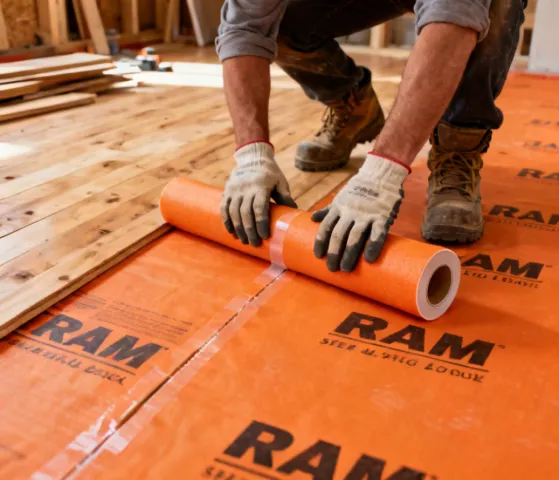
Roll Out Ram Board
Unroll Ram Board from one end of the room to the other, printed side up. Roll lengths can be cut to size with a utility knife. Allow 1–2 inch overlap at walls. Stagger seams between rows for added coverage.
Tape All Seams and Edges
Apply Ram Board Seam Tape along all joints, overlaps, and perimeter edges. This prevents spills, paint, and grout from penetrating through seams. Tape to the protection itself — never tape directly to finished flooring.
Inspect Regularly
Every 2–3 weeks, lift a section and inspect the floor below. Check for moisture buildup, shifting, or damage. Replace any sections that have been compromised. Document your inspections for project records.
Remove and Roll Up for Reuse
To remove, lift edge tape first, then carefully roll Ram Board back toward one end. Avoid dragging across the protected surface. Roll up and secure for transport to the next phase or project area.
👋 Pro Installation Tip
When protecting floors near paint or drywall work, extend Ram Board 4–6 inches up the wall and tape in place. This catches drips and overspray before they reach floor level — especially important for baseboard and door trim finishing.